

OUR Take on the legendary Ocean Course at Kiawah Island, a Top 100 U.S. golf destination known for Atlantic views, championship history, dramatic holes, and one of golf's greatest tests.
Golfers travel thousands of miles and spend hundreds of dollars for the chance to play the Ocean Course at Kiawah Island. That's a bold commitment for a single round, so the obvious question is: does it actually live up to the hype?
The short answer is yes. If you're looking for one of America's greatest championship golf experiences, few public courses come close. It's breathtaking, brutally difficult, and steeped in golfing history. That said, it isn't necessarily the right course for everyone.
Below, I'll share everything you should know before booking your tee time at this masterpiece, one of the Top 100 golf courses in the U.S.
Before you hit the green, a quick hello from us:
At Kiawah Exclusives, we offer more than 115 carefully selected vacation rentals across Kiawah Island, from cozy villas to spacious oceanfront homes with private pools. With more than 40 years of local experience, our team is always happy to help you find the perfect place to stay and point you toward some of the area's best experiences.
On our vacation blog, you'll find local tips on the best ways to explore nature on Kiawah Island, how to plan a golf vacation, holiday experiences, and much more.
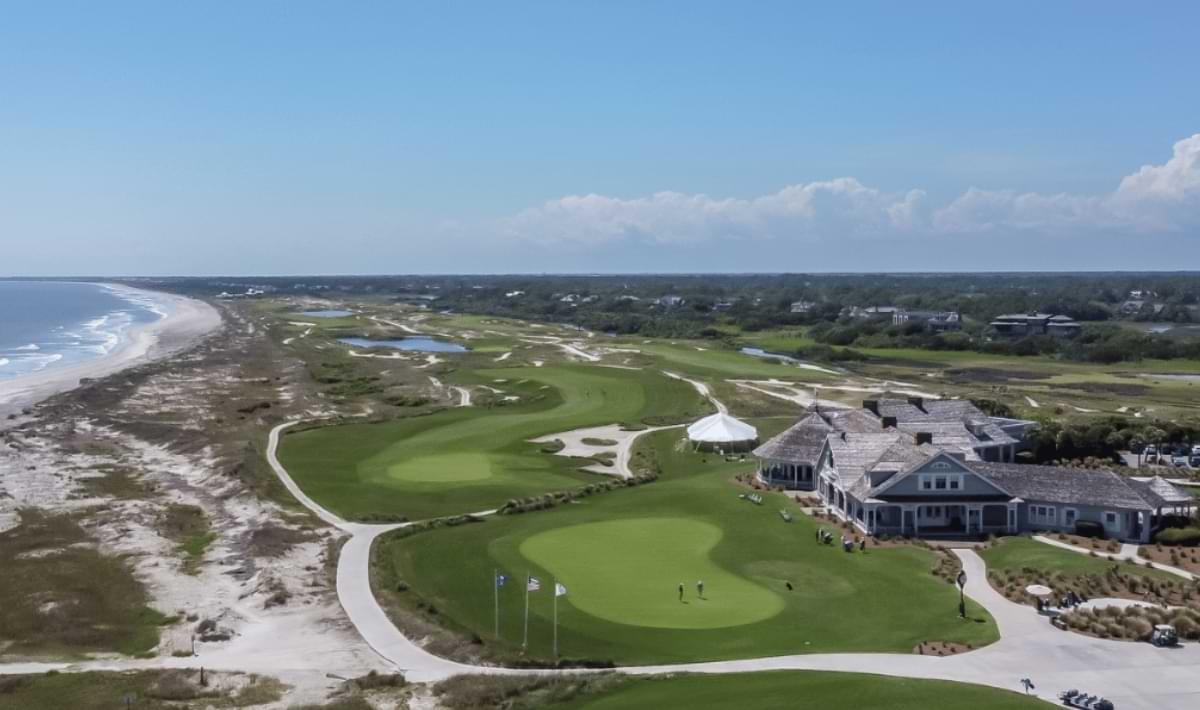
So, is it really worth the hype?
The golfing community has spoken, and the Ocean Course rarely disappoints.
Based on online reviews across different platforms, many golfers describe the Ocean Course as one of the few bucket-list courses that genuinely exceeds expectations. Words like masterpiece, spectacular, and absolute gem appear again and again in reviews, with many saying they'd happily play it again despite the premium green fees.
Much of that praise comes from the complete experience. You're playing a course that has crowned champions like Rory McIlroy and Phil Mickelson and walking the same fairways that hosted the legendary 1991 Ryder Cup, better known as the "War on the Shore."
Professional caddies also receive high marks. Many visitors say their local knowledge, wind advice, and green reading transformed the round.
The biggest criticism is the price. Green fees typically range between $600 and $700, leading some golfers to suggest that Kiawah's other layouts, such as Osprey Point or Cougar Point, offer better value.
The biggest deciding factor, however, is difficulty. Golfers who play from the appropriate tee boxes generally walk away delighted. Those who overestimate their game often find the round far more punishing than enjoyable.
Why is the Ocean Course so famous?
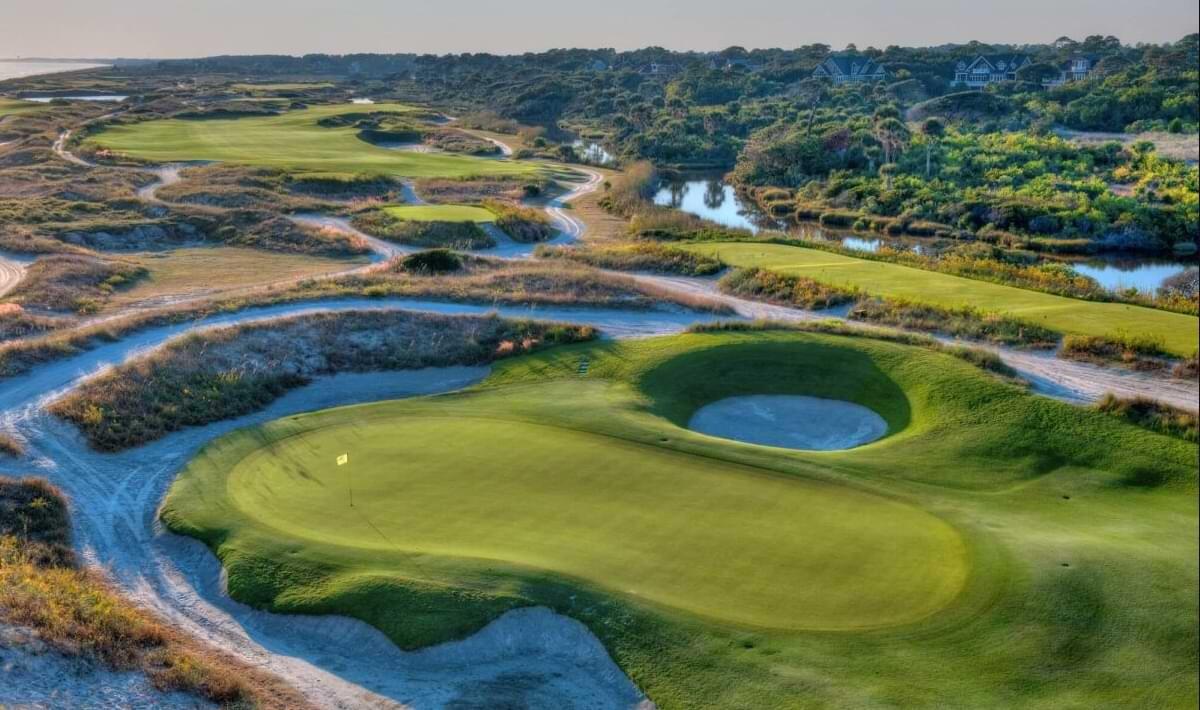
Designed by Pete and Alice Dye, the Ocean Course is unlike almost any other golf course in North America.
It features more seaside holes than any course in the Northern Hemisphere. Ten holes run directly alongside the Atlantic Ocean, and another eight play parallel to the coastline.
One of Alice Dye's most influential decisions was raising the entire course above the dunes. The result is uninterrupted ocean views from every hole, along with another defining feature: wind.
The coastal breeze shapes every round here. With nearly every hole fully exposed above the dunes, conditions can change over the course of a single day. The same hole might call for a short iron one afternoon and a hybrid the next. That constant unpredictability ensures no two rounds play alike, even for golfers who know the course well.
Walking Through the Holes
Hole 1–4: A Gentle Start That Doesn't Stay Gentle
Pete Dye described the opening hole as a "gentle handshake," and it's exactly that. One of the widest fairways on the course offers a welcoming start before the second hole introduces the first major decision of the day. This risk-and-reward par five asks players how much of the surrounding salt marsh they're willing to carry in exchange for a shorter approach. The third shifts the challenge to the greens, where an elevated "volcano" putting surface punishes even slight misses. By the fourth, any sense of comfort disappears. Often considered the course's toughest hole, it throws everything at you: marsh carries, relentless coastal winds, and demanding length.
Hole 5–9: Precision Takes Center Stage
The front nine continues to demand thoughtful shot-making rather than brute strength. The fifth is the only hole that doesn't follow the course's dominant east-west routing, exposing golfers to tricky crosswinds as they play toward the Atlantic. Long par fours at the sixth and ninth reward accuracy over aggression, while the seventh provides one of the front nine's better birdie opportunities for players willing to take on Pete Dye's trademark risk-and-reward design. The sixth and ninth demand precision rather than power. Between them sits the seventh, one of the front nine's strongest birdie opportunities for players willing to take on Pete Dye's trademark risk-and-reward design. The eighth's elevated green leaves little margin for error, and club selection is especially important when the wind starts to swirl.
Hole 10–14: Pete Dye at His Most Strategic
The back nine opens with visual deception. Deep waste areas encourage players to steer left off the tenth tee, even though doing so creates a much tougher approach. The eleventh and twelfth demand patience. Then comes the thirteenth, Pete Dye's personal favorite and perhaps the clearest expression of his architectural philosophy. The fourteenth shifts the focus from strategy to scenery, mixing sweeping Atlantic views with a classic Redan green puts the emphasis on both precision and imagination.
Hole 15–18: One of Golf's Great Finishes
The Ocean Course saves some of its finest moments for last. Accuracy is essential on the fifteenth before the sixteenth presents one of the course's few realistic birdie opportunities, provided you avoid the massive Sahara bunker protecting the green. Then comes the legendary seventeenth, where golfers play across an eight-acre lake to the narrow putting surface that hosted some of the most dramatic moments of the 1991 Ryder Cup. The eighteenth is every bit as memorable, tracing the Atlantic shoreline before climbing toward the clubhouse in front of a natural amphitheater that has witnessed countless championship finishes.
More than just championship golf
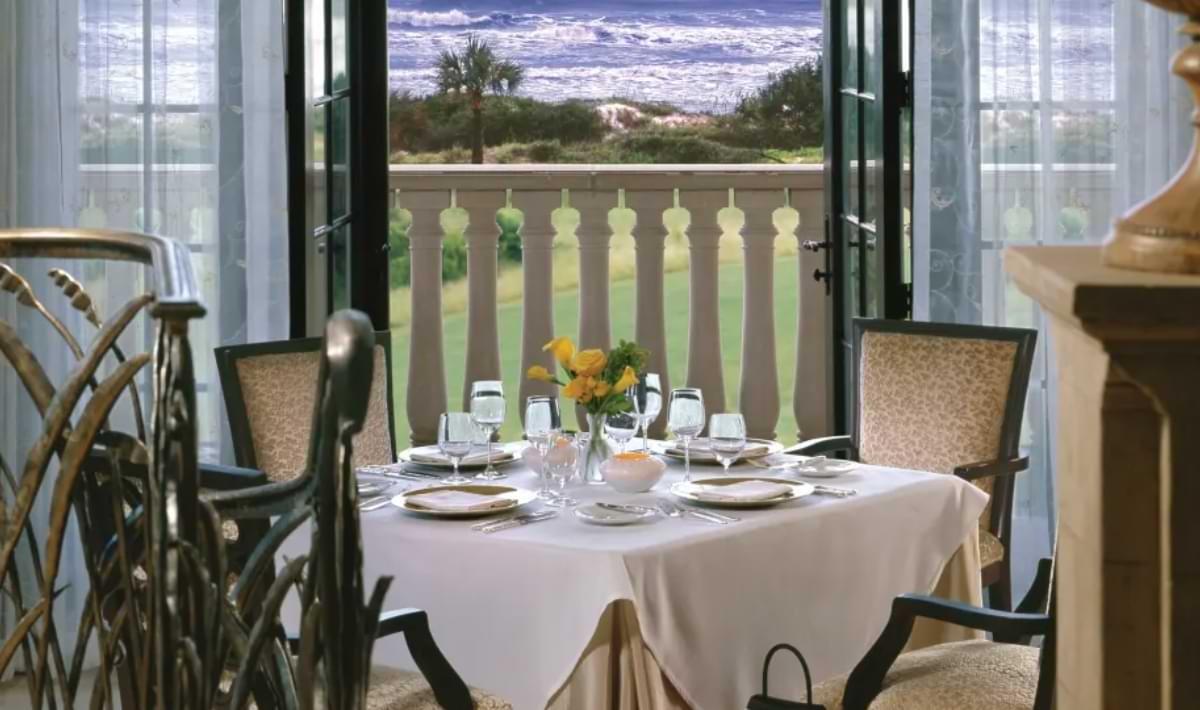
Golf is the big star here, but the Ocean Course is also home to stellar dining options where you can recharge your batteries after your round with fantastic food and drinks.
After golf, many players head straight to the Ryder Cup Bar for its Ocean Course Ale, fried green tomatoes, and front-row views of the eighteenth green. For something more refined, The Atlantic Room serves fresh seafood alongside sweeping Atlantic views that rival the golf itself.
You'll also find other great amenities, including an upscale golf shop stocked with premium apparel, logo merchandise, and luxury gifts, as well as one of the country's most scenic practice greens beside the beach. The driving range sits about ten minutes away, with shuttle transportation provided before tee times.
What should you know before you go?
Planning a round? Here are a few things to keep in mind.
Tee times are in enormous demand, especially during spring and fall, so many golfers reserve six to twelve months in advance. Resort guests receive priority booking windows.
The course was designed to be walked, covering roughly 6.5 miles over the course of a round. Carts are available during certain periods, but they stay on designated sand paths that often sit below the fairways, limiting some of the views.
Hiring a caddie is one of the best investments you can make. Besides helping read the famously subtle Paspalum greens, caddies provide invaluable advice on wind direction, strategy, and club selection.
One piece of advice you'll hear time and again is this: leave your ego behind. Five tee options allow golfers of different abilities to tackle the course without turning every hole into a survival test.
One last thing. Wildlife is part of the experience
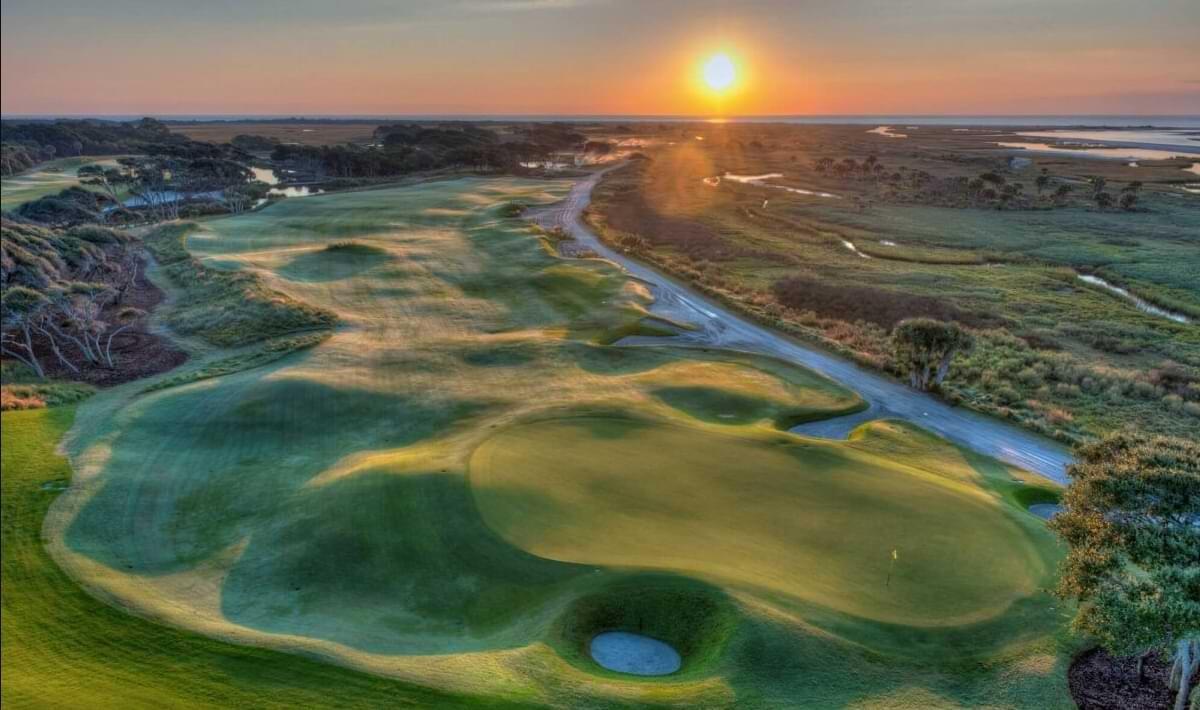
The Ocean Course is a Certified Audubon Cooperative Sanctuary, so golf shares the stage with plenty of wildlife.
Alligators are a regular sight around ponds and marshes, and you may also spot deer wandering across the fairways.
Heads up: Venomous snakes also inhabit parts of the property, so it's wise to use a club rather than your hand when retrieving balls from tall grass.
The ocean course's most frequently asked questions
Yes, the course is open to golfers of all skill levels. However, first-time visitors and higher-handicap players should choose the appropriate tee boxes and strongly consider hiring a caddie. The layout is designed to challenge even professionals, so realistic expectations go a long way toward enjoying the experience.
2. What's the best season to play the Ocean Course?
Spring and fall offer the most comfortable playing conditions, with milder temperatures and lower humidity than summer. These are also the busiest times of year, so tee times tend to book up well in advance.
3. How long does a round usually take?
Given the difficulty of the layout, the walking format, and the popularity of caddie services, rounds often take longer than the typical four hours. Allow plenty of time and avoid scheduling other activities immediately afterward.
4. Can non-golfers visit the clubhouse?
Yes. Visitors who aren't playing golf can still enjoy the clubhouse's restaurants and ocean views.
5. Are there practice opportunities before the round?
Absolutely! The Ocean Course features a large putting green near the clubhouse, and the driving range is accessible by shuttle before your tee time. Arriving early gives you time to adjust to the coastal wind before stepping onto the first tee.
6. What should I wear?
Standard golf attire is expected. Lightweight, breathable clothing is particularly helpful during the warmer months, along with a hat, sunglasses, sunscreen, and comfortable golf shoes suitable for walking several miles.
Yes. The clubhouse overlooks one of the most scenic stretches of the Atlantic coastline on Kiawah Island, and its restaurants provide a chance to enjoy the atmosphere while watching golfers finish on the iconic eighteenth hole.


Time to Plan Your Kiawah Island Escape
Miles of quiet beaches, award-winning golf courses, maritime forests, scenic bike trails, and epic Lowcountry landscapes all await on Kiawah Island. At Kiawah Exclusives, our collection of well-curated vacation rentals is the perfect starting point for your island escape.
We look forward to welcoming you to the South Carolina Lowcountry soon!